 uControl

OpenAI Is Surging Into Banking. Can Banks Trust the Infrastructure Beneath It?
Is Your IT Platform Really Your Single Source of Truth?
Most organisations already have plenty of IT tooling. The real test is whether those tools can give you the answers you need, when you need them.
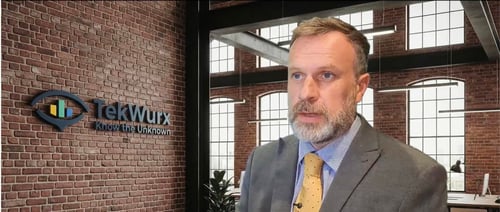
In his latest VLOG, TekWurx CEO Nik Dimmock puts that idea to the test with 12 vital questions every IT leader should consider asking. Most organisations aren't short of IT tools. Discovery platforms. CMDBs. Endpoint management. Monitoring. Security tools. Individually, each can tell you a lot about a particular part of your technology estate. But there's a much more important question: If your existing platform is your single source of truth, how quickly can it answer the questions that really matter? Not after exporting data into spreadsheets. Not after asking three different teams. And not after building another dashboard. Right now, in the tool.
1. What software is being used that we don't actually own?
Software doesn't always enter an organisation through approved procurement and IT processes. Employees can download applications, install browser extensions and start using services themselves. Can you identify that software, and understand where and how it is being used?
2. Which business-critical applications have infrastructure that isn't being discovered?
A discovery tool can show you what it has discovered. But can you identify the infrastructure supporting critical applications that hasn't been discovered?
3. Which devices are communicating on our network but don't exist anywhere else?
What about devices communicating across your network that aren't represented in your CMDB or appearing in your discovery platform? Can you identify them, or do they remain invisible?
4. If a new subnet appeared tomorrow, would we know?
Imagine a team provisions a new network range tomorrow. Would your tooling proactively identify it without someone first configuring the platform to look for it? The question isn't simply whether you can discover a known environment. It's whether you can identify when the environment itself changes.
5. Which applications are consuming SaaS services we haven't approved?
The same problem applies to SaaS. Employees can access new services through a browser, while applications and software can establish connections to external services. Can you identify which services are being consumed and determine whether they've actually been approved?
6. Which assets are costing us money but nobody is using?
Hardware, software, subscriptions and services all have a cost. Can you identify assets the organisation continues to pay for despite nobody actually using them? Without that visibility, unnecessary technology expenditure can easily remain hidden.
7. Can I trust my CMDB?
That's a big question, so Nik makes it more specific. Which configuration items or assets are validated by more than one independent data source? And, just as importantly, which records have a lower level of trust or can't currently be independently validated? A CMDB containing data isn't necessarily the same thing as a CMDB containing trusted data.
8. What changed in our estate today that nobody planned?
Technology environments change constantly. Can your platform tell you what changed today, particularly when that change wasn't expected or planned? Knowing what you have is valuable. Knowing when the truth of your environment changes is even more powerful.
9. Which business services are at risk because of hidden dependencies?
Can you open a service map and quickly identify unknown or undocumented dependencies? If something changes or fails, those hidden relationships can suddenly become extremely important. Understanding assets without understanding their relationships to business services only gives you part of the picture.
10. What don't I know?
This may be the hardest question of all. Can your platform proactively tell you what's missing, inconsistent or unusual? Can it establish what normal looks like and identify when something deviates from it? Or do you have to know what you're looking for before the platform can find it?
11. Where is AI being used across my organisation?
AI introduces another dimension to the visibility problem. It could be a browser plug-in, functionality embedded within a business application or a standalone tool installed by an employee. Can you identify where AI is being used, whether that usage has been approved and what other systems or processes depend upon it?
12. If an employee left today, could we identify everything they have and recover it?
Think beyond the laptop. Monitors. Headsets. Peripherals. Software. SaaS subscriptions. Browser-based applications. Technology acquired outside approved processes. If somebody left the organisation today, could you quickly identify everything associated with that employee and ensure it was recovered or reassigned?
The Real Test Of Your IT Data
The important question isn't how many tools you have. It's how quickly those tools can give you answers.
If somebody in your organisation asked one of these 12 questions tomorrow, could you answer it from your platform of truth in minutes? Or would you need to consult five different systems, export the information and hope the data matches? Because having more IT data isn't the same as having trusted operational intelligence. Calling something your single source of truth doesn't make it true.
Watch Nik Dimmock's VLOG and put your own IT environment to the 12-question test.

Nik Dimmok
Sep 4, 2026, 2:20:04 PM
Sep 4, 2026, 2:20:04 PM